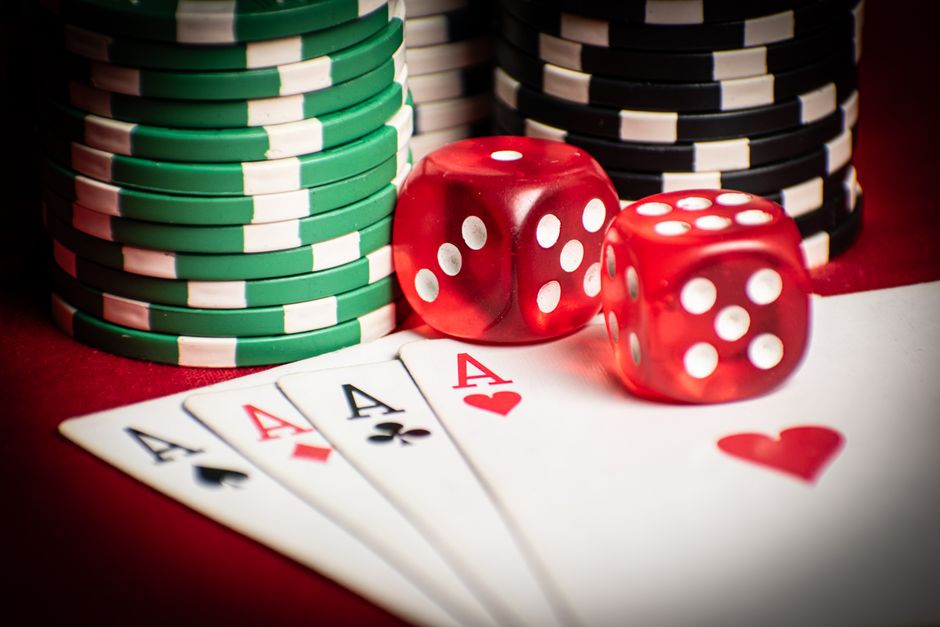
Walk into any online casino lobby and you'll see the same bright banners for slots, live dealer tables, and the sportsbook. They look like siblings. They are not. The underlying economics of a slot machine, a poker room, and a betting market have almost nothing in common, and understanding those differences is the single fastest way to stop being a depositor and start being a player.
Let's pull back the curtain on how each vertical actually makes its money—and what that means for your bankroll.
Every form of gambling gets sorted into one of two categories. In house-banked games—slots, roulette, blackjack, baccarat—you play against the casino, and the casino builds a mathematical margin into every wager. In player-vs-player games—poker, daily fantasy, some exchange betting—the operator just takes a cut and steps aside.
That distinction changes everything. A slot machine with a 4% house edge will return roughly $96 for every $100 wagered, over millions of spins. A poker room charging 5% rake doesn't care whether you win or lose; it takes its slice from every pot regardless. Your edge in poker comes from the other players' mistakes. Your edge in slots comes from... nothing, really, except luck and bonus features.
Notice the spread. Blackjack and poker reward skill. Slots and keno do not. If you're chasing long-term profit, that list right there tells you where to spend your hours. We found L'Avenue Dubai to be a handy reference here.
House edge is only half the story. The other half is variance—how wildly your results swing around the average.
A slot with 96% RTP and low variance might drip-feed small wins every ten spins. A high-variance slot with the same RTP might go 300 spins without a payout and then hand you 500x your stake. Both games are mathematically identical long-term. Your experience of them is not.
Here's the trap: players see a 96% RTP and think they'll lose about 4% per session. In reality, over a short session, you might lose 80% of your buy-in or triple it. RTP is a number that only becomes meaningful over hundreds of thousands of spins. The machine you're playing tonight is not obliging the law of large numbers on your behalf.
Practical takeaway: match variance to your bankroll. If you have 40 units to play with, low-volatility slots (think 10–20x max wins) will let you play longer. If you're hunting a big score and can stomach busting, high-volatility games are your lane. Just don't sit at a high-variance slot with a 20-spin bankroll and get confused when it evaporates in two minutes.
Once you understand that poker isn't gambling against the house, everything shifts. The rake is a tax, and your job is to earn more from other players than the tax takes. In a soft $1/$2 no-limit game, a competent player might win 5 to 10 big blinds per hour. At $2 big blinds, that's $10–$20/hour—before you factor in the rake, which eats into every pot you win.
This is why game selection matters more than almost anything else in poker. Sitting in a tough lineup against solid regs is a slow bleed. Sitting in a game with two calling stations and a tilting tourist is a paycheck. The cards are the same. The opponents are not.
If you're new to the game, focus on these fundamentals before anything fancy:
Poker has a learning curve measured in years, not weeks. The good news is that the curve exists at all. There's no equivalent for slots.
Bookmakers don't guess who will win—they price markets so that money comes in roughly balanced on both sides, then collect the margin. A typical NFL spread is -110 on both sides, meaning you risk $110 to win $100. That extra 10 is the vig, and it adds up fast.
Convert -110 to a percentage and you get 52.38%. To break even long-term at that price, you need to win 52.4% of your bets. This is why sharp bettors obsess over line shopping: the difference between -110 and -105 is the difference between a losing and a winning season.
If you're betting casually, this doesn't matter much. If you're betting seriously, it matters more than your handicapping. A great pick at a bad price loses money. A mediocre pick at a great price can still grind out profit.
Casino bonuses are marketing, not charity. A 100% match up to $500 with a 40x wagering requirement means you must wager $20,000 (40 times the $500 bonus) before withdrawing anything. At a 4% house edge, that's an expected loss of $800—more than the bonus itself.
Not all offers are bad. Sticky bonuses, cashback deals, and low-wagering free spins can be genuinely +EV for disciplined players. The trick is to read the terms in this order:
If a bonus advertises a "$1,000 free" with a 60x rollover and a $200 cashout cap, it isn't a $1,000 bonus. It's a $200 bonus wearing a costume.
Slots, sports betting, and poker are three different financial instruments that happen to live under the same roof. Slots sell entertainment with an expected cost baked in. Sportsbooks sell opinions with a margin attached. Poker sells an opportunity to outplay other humans—if you're good enough.
None of that means you should avoid slots or sports betting. A high-RTP slot with reasonable stakes is a perfectly fine way to spend a Saturday night, and a well-priced NFL parlay is a genuine thrill. But knowing why a slot will bleed you slowly and a poker game won't (assuming you're better than your opponents) is the line between a fun hobby and an expensive surprise. Treat them as what they are, not as what the lobby art makes them look like.
Play smart, read the fine print, and remember: the house doesn't beat you with lucky cards. It beats you with arithmetic.

Ask ten casino regulars why they keep coming back and you'll get ten different answers. The thrill of a bonus round,...

Watch a multiplier climb from 1.00x to 2.00x to 5.00x, then vanish in a heartbeat. Somewhere in that span, a player...
Every gambler has heard the phrase "the house always wins." It's repeated like scripture in forums, at poker tables,...

Personal finance rooted in the countryside.
